loader image
Close
  • Home
  • Services
  • Projects
  • Articles
  • About Us
  • [email protected]
Viona Group Inc Logo 150x150
  • Home
  • Services
  • Projects
  • Articles
  • About Us
Viona Group Inc Logo 150x150
  • Home
  • Services
  • Projects
  • Articles
  • About Us

Microbial electrolysis cells designed for BioH2 production: Potential improvements with carbon dioxide and nitrogen

By vgroupadmin 
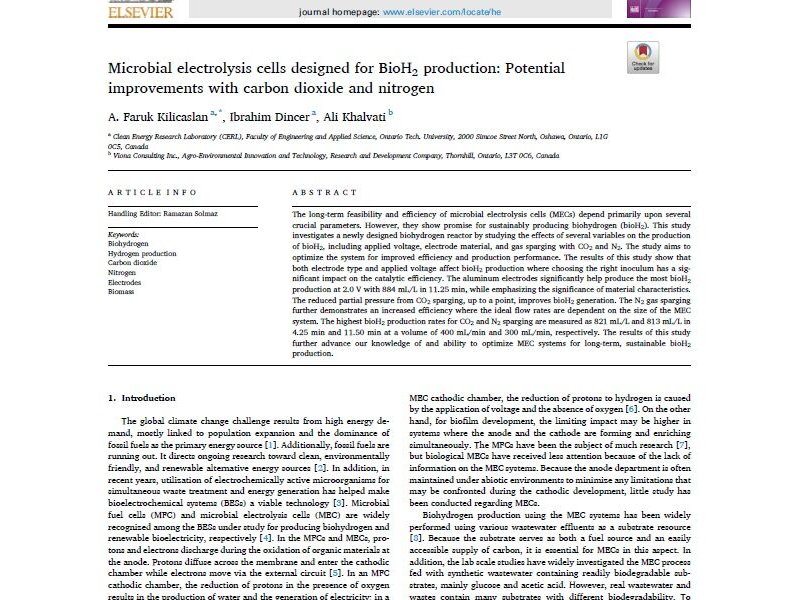
Microbial electrolysis cells designed for BioH2 production: Potential improvements with carbon dioxide and nitrogen
Download

  • Description
  • Package Info

The long-term feasibility and efficiency of microbial electrolysis cells (MECs) hinge on key parameters, showing potential for sustainable biohydrogen (bioH2) production. This study explores a newly designed biohydrogen reactor by analyzing the effects of applied voltage, electrode material, and gas sparging with CO2 and N2, aiming to optimize system efficiency and performance.

Results indicate that electrode type and applied voltage significantly influence bioH2 production, with the choice of inoculum playing a crucial role in catalytic efficiency. Aluminum electrodes yielded the highest bioH2 production of 884 mL/L at 2.0 V within 11.25 minutes, highlighting the importance of material characteristics. CO2 sparging reduced partial pressure, enhancing bioH2 generation up to an optimal point. Similarly, N2 gas sparging improved efficiency, with ideal flow rates depending on MEC system size.

The highest bioH2 production rates were achieved with CO2 sparging at 821 mL/L in 4.25 minutes (400 mL/min) and N2 sparging at 813 mL/L in 11.50 minutes (300 mL/min). These findings contribute to advancing MEC systems for long-term, efficient, and sustainable bioH2 production.


  • Version
  • Download 6
  • File Size 3.03 MB
  • File Count 1
  • Create Date January 13, 2025
  • Last Updated January 14, 2025

Interaction Effects of Glomus and Xenobiotic Glutathione Conjugate on the Detoxification Enzymes of the Mycorrhizal Roots in Barley
Previous Article
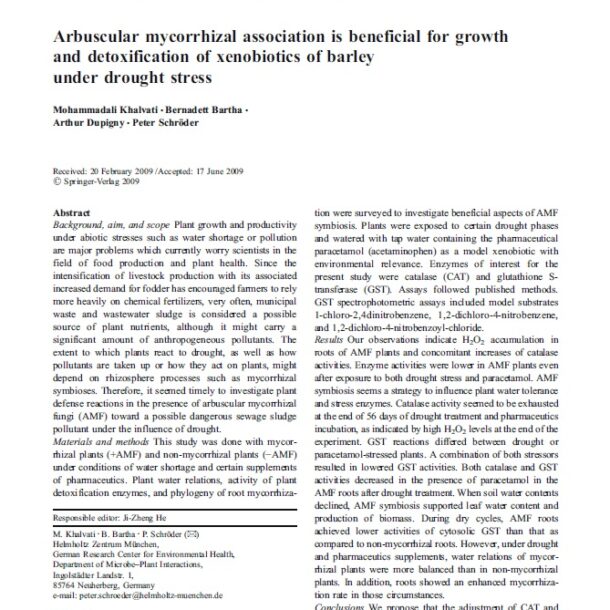
Mohammadali Khalvati - Arbuscular mycorrhizal association is beneficial for growth and detoxification of xenobiotics of barley under drought stress pdf
Arbuscular mycorrhizal association is beneficial for growth and detoxification of xenobiotics of barley under drought stress
Next Article

Toronto

Unit 260,  7163 Yonge St. Thornhill, Ontario, Canada – L3Y5Y1          Phone: +1 437.239.4416  Email:  [email protected]

Ontario Tech University and Viona Consulting | Ontario Tech University Logo
Mitacs and Viona Consulting | Mitacs Logo
Canadian Government and Viona Consulting | Canada Logo
Copyright © 2025 Viona Group Inc. All Rights Reserved.