
loader image
Close
  • Home
  • Services
  • Projects
  • Articles
  • About Us
  • [email protected]
Viona Group Inc Logo 150x150
  • Home
  • Services
  • Projects
  • Articles
  • About Us
Viona Group Inc Logo 150x150
  • Home
  • Services
  • Projects
  • Articles
  • About Us

Interaction Effects of Glomus and Xenobiotic Glutathione Conjugate on the Detoxification Enzymes of the Mycorrhizal Roots in Barley

By vgroupadmin 
Download

  • Description
  • Package Info

Symbiotic plants detoxify organic xenobiotics through associations with microorganisms, utilizing conjugation reactions mediated by enzymes like glutathione S-transferases (GST). A significant portion of the resulting metabolites reaches the rhizosphere, potentially impacting other plants' roots and microorganisms in the root zone.

This study investigated the influence of a xenobiotic conjugate, dinitrobenzene-glutathione, on non-mycorrhizal hairy roots of barley (Hordeum vulgare L.) and roots colonized with Glomus hoi. Hairy roots treated with glutathione conjugates showed transient induction of GST-CDNB activity and dichloromethane detoxification within the first 18 hours. Fungi-colonized roots reacted faster than non-mycorrhizal roots. Roots reduced the conjugate DCNB with glutathione at the cost of p-NBOC activity.

These findings are the first to report synergistic effects of soil fungi and xenobiotic conjugates on plant roots. They underscore the significant role of symbiosis in altering plant root detoxification capacities, thereby influencing the plant-mycorrhizosphere metabolism of organic xenobiotics.


  • Version
  • Download 2
  • File Size 7.04 KB
  • File Count 1
  • Create Date January 13, 2025
  • Last Updated January 13, 2025

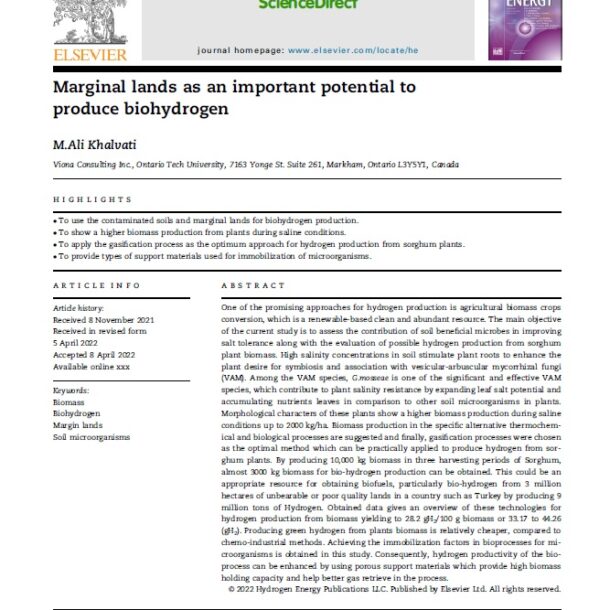
Mohammadali Khalvati - Marginal lands as an important potential to produce biohydrogen pdf
Marginal lands as an important potential to produce biohydrogen
Previous Article
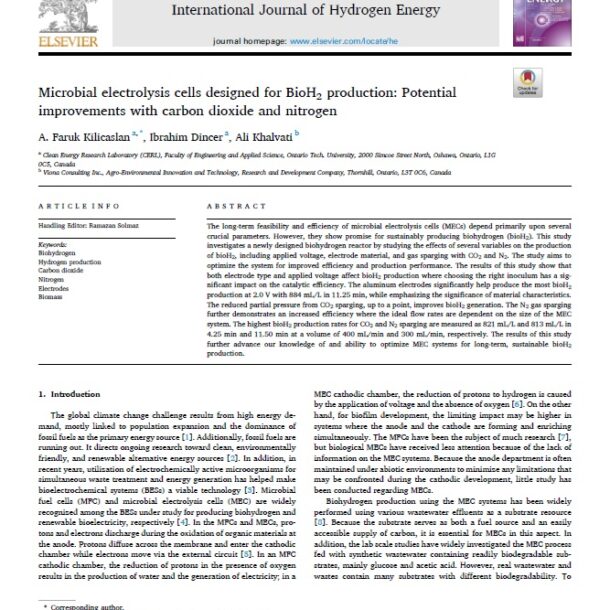
Mohammadali Khalvati - Microbial electrolysis cells designed for BioH2 production Potential improvements with carbon dioxide and nitrogen pdf
Microbial electrolysis cells designed for BioH2 production: Potential improvements with carbon dioxide and nitrogen
Next Article

Toronto

Unit 260,  7163 Yonge St. Thornhill, Ontario, Canada – L3Y5Y1          Phone: +1 437.239.4416  Email:  [email protected]

Ontario Tech University and Viona Consulting | Ontario Tech University Logo
Mitacs and Viona Consulting | Mitacs Logo
Canadian Government and Viona Consulting | Canada Logo
Copyright © 2025 Viona Group Inc. All Rights Reserved.